
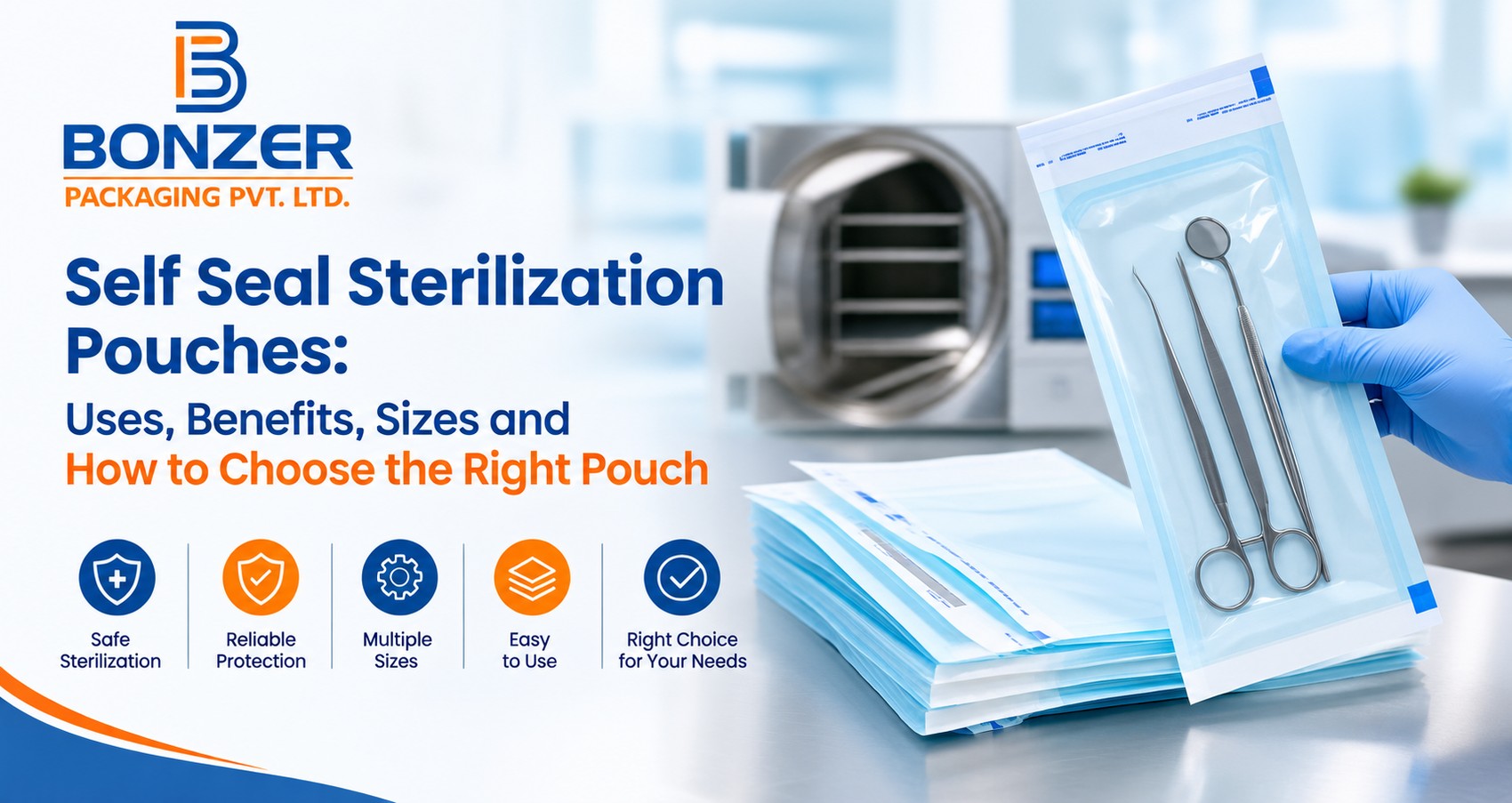
Self Seal Sterilization Pouches: Uses, Benefits, Sizes and How to Choose the Right Pouch
The process of sterilization is only as good as the packaging protecting an instrument after the sterilization process. Should there be an improper seal, poor fit, or damage incurred during transit, the sterile barrier could be broken prior to reaching the site where the instrument will be used.
Self Seal Sterilization Pouches provide an easy solution by providing both the pouch itself along with a sealing feature. These are widely used for packaging instruments prior to sterilization, using clear film to enable identification of what is contained within the package.
Choosing the right pouch requires something more than selecting a suitable size.
What are Self Seal Sterilization Pouches?
Self Seal Sterilization Pouches refer to preformed packaging pouches that are used to encapsulate instruments before sterilization. Unlike heat-seal pouches or reels, they feature an integrated adhesive strip, allowing the pouch to be closed manually without a separate heat-sealing machine.
Typical construction combines medical-grade paper with transparent multilayer film. The paper side allows appropriate sterilant penetration, while the transparent side makes it easier to identify the packaged instrument.
Many commercially available pouches also feature chemical process indicators that change colour after exposure to specified sterilization conditions. However, the indicator should be treated as a process indicator, not as proof that an instrument is sterile.
Where Are Self Seal Medical Pouches Used?
The biggest advantage of Self Seal Medical Pouches is their versatility for individual instruments and smaller instrument sets.
Common applications include:
● Dental clinics for probes, scalers, mirrors and other reusable instruments
● Hospitals and clinics for compatible reusable medical instruments
● Laboratories where sterilized tools need individual packaging
● Minor procedure rooms where instruments need to remain protected until use
● Healthcare facilities looking for convenient pre-formed sterilization packaging
For example, a dental clinic may use smaller pouches for individual instruments while selecting wider formats for instrument sets. Standard product ranges available in the market span multiple dimensions, allowing users to match the pouch to the instrument rather than forcing every item into one standard size.
Key Benefits of Medical Self Seal Pouches
1. No heat sealer needed
The built-in adhesive strip allows hand closure, which may prove useful when developing a packaging process and eliminates the need for an additional sealer.
2. Easier identification of the contents
Being transparent, the film makes it possible to see the packed instrument without removing it from the sterile barrier.
3. Simple sterilization verification
Pouches usually have printed chemical indicators intended to visually display that the package underwent the appropriate sterilization procedure.
4. Availability of different sizes
Various instruments necessitate different sizes of pouches. Therefore, the manufacturer offers various sizes, from small pouches for small dental instruments to large ones for big instruments and instrument sets.
5. Sterile storage is possible
When packed properly, processed, handled and stored in the appropriate manner, the pouch serves as a sterile barrier for the packaged instrument.
Self Sealing Sterilization Pouches: Finding the Proper Pouch Size
Selecting the proper size is one of the most important steps in the packaging process.
If the pouch is too small, it will put excessive strain on the material and seal. If the pouch is overly big, the instrument inside can shift, putting the package at risk of being damaged.
Here is how you can easily accomplish that:
- Take measurements of the tool considering its length, width, and protrusions.
- Ensure there is sufficient space left for the instrument not to be pressed against the sides.
- Check the area of the seal before sealing it. There should be enough space in the form of an adhesive strip left for the closure.
- Do not use too much of the pouch.
- Select a pouch compatible with the intended sterilization method.
Available sizes vary between manufacturers. For reference, commercial ranges include formats such as 60 × 100 mm, 75 × 200 mm, 90 × 230 mm, 130 × 290 mm and larger sizes for bigger instruments or sets.
The exact size should always be selected according to the instrument, packaging system and manufacturer's validated instructions.
What Should You Check Before Buying Self Seal Sterilization Pouches?
Price should not be the only purchasing consideration. Before selecting a supplier, check:
● Medical-grade packaging materials
● Sterilization method compatibility
● Reliable adhesive closure
● Strong and consistent seals
● Clear process indicators
● Suitable range of pouch sizes
● Good visibility through the film
● Resistance to tearing and puncturing
● Applicable quality and regulatory documentation
● Consistent manufacturing quality
For healthcare and medical-device applications, it is also important to review the supplier's technical documentation and verify which standards and sterilization processes the specific product is designed for. Some established products, for example, specify compliance with standards such as ISO 11607-1, ISO 11140-1 and EN 868-5.
A practical example
Suppose a clinic frequently sterilizes three types of instruments: small dental probes, longer hand instruments and larger instrument sets.
Instead of using one oversized pouch for everything, the clinic can maintain different pouch sizes for different instrument categories. This can improve handling, reduce unnecessary packaging material and help prevent instruments from shifting excessively inside the pouch.
Comparison Between Self-Seal and Heat-Seal Pouches
Selection of either self-seal or heat-seal pouches will depend on the process flow.
Self-seal pouches are easy to use as the pouches are already formed and can be sealed manually. This will make the process easier in situations that require more flexibility and ease of use.
Heat-seal pouches or reels give the user an option to seal through a sealing machine.
The right choice depends on factors such as volume, equipment, instrument variety, packaging process and validated sterilization requirements.
Why Supplier Quality Matters
Sterilization packaging is not simply a disposable bag. It forms part of the barrier system protecting a processed instrument.
A reliable supplier should be able to provide clear information about materials, dimensions, sterilization compatibility, indicators, sealing performance and quality controls.
When looking for suppliers of medical packaging in India, one firm which could be looked at is Bonzer Packaging Pvt.Ltd. The important point is to match the pouch specification to the actual application rather than selecting a product based only on price or appearance.
For Ahmedabad and other Indian healthcare and medical-device markets, factors such as consistent supply, customization requirements and technical support can also be important when selecting a packaging partner.
How to Use Self Seal Sterilization Pouches Properly
Even a high-quality pouch needs to be used correctly.
Prior to Sterilization
● Ensure that all the equipment is clean and dry.
● Use correct size pouches.
● Do not overpack the pouches.
● The instrument should be placed properly in order to avoid unnecessary pressure on the pouch material.
● Pouches should be closed in accordance with the directions of the pouch manufacturer.
● Adhesion area should be clean and sealed.
After Sterilization:
● Pouches should be made sure to be cooled and dried in accordance with the validated process.
● Tears, punctures, wetness and seal damage should be checked on the pouches.
● Store packs in a clean, dry and protected environment.
● Do not use a package if its sterile barrier has been compromised.
Most importantly, always follow the pouch manufacturer's instructions and the validated sterilization cycle for the specific instrument and sterilizer. Compatibility can vary by product.
Selecting The Right Self Seal Sterilization Pouches
It does not always mean that the right pouch should be the biggest, cheapest, or the most advanced one. What matters most is that it should fit the instrument well and be compatible with the selected sterilization method.
To evaluate various Self SealSterilization Pouches, take into account all of their aspects, such as the materials, size, seal, sterilization indicator, compatibility with the selected sterilization method, quality certificates, and supplier reliability.
Given the proper parameters and correct handling, a self-sealing sterilization pouch is likely to provide better organization of the sterilization procedures and good protection of the instrument before its use. To discuss the right pouch specifications for medical or dental needs, please contact Bonzer Packaging Pvt. Ltd.
Frequently Asked Questions
What are Self Seal Sterilization Pouches?
Self Seal Sterilization Pouches are pre-formed pouches with built-in adhesive strips that are used to package compatible instruments prior to sterilization.
How does self sealing sterilization pouch work?
Instruments are inserted into the pouch, and the adhesive flap is sealed manually.
What sizes can you get in Self Seal Medical Pouches?
Several sizes are available depending on the brand and uses, whereby some are smaller in size in order to allow them contain individual dental equipment while others have the capacity to accommodate larger medical equipment.
Can Medical Self Seal Pouches be autoclaved?
Some of them are autoclavable while others may be suitable for other types of sterilization processes. It is therefore necessary to know if your chosen pouch is compatible with the sterilization process you use.
Do Self Seal Sterilization Pouches need a heat sealer?
These pouches do not require a heat sealer since their internal adhesive strips make it possible to easily close the pouch manually without using a heat sealer to close the pouch.
What should I consider when selecting my sterilization pouch size?
The pouch should be selected according to the instrument's length, width and protrusions, with sufficient space to prevent unnecessary pressure on the pouch and seal.